This webinar will briefly discuss the process of organic certification including the on-farm inspection. The presenter will describe key issues and concerns that are examined in the inspection and review process. The presentation will include a discussion of common mistakes and anecdotal stories to highlight certifier concerns. Certification requirements related to conservation, such as erosion,… Continue reading Insights from an Organic Certifier
Type: Webinars
Reduced Tillage in Organic Vegetable Production
This video is intended for organic vegetable producers and agricultural professionals, especially in the maritime northwest. Techniques and findings from recent research are shared to assist producers in trialing reduced tillage systems. The video covers the concept of reduced tillage organic agriculture, cover crop and weed management, and specialized equipment.
Integrate Livestock into Your Veggie Crops
This question-and-answer session is a follow-up to a webinar NCAT hosted about integrated crop-livestock systems. Such systems may provide sustainable alternatives to terminate cover crops, reduce fertilizer, and improve the water cycle. Featured in this session are Montana specialty crop farmer Leon Stangl, Montana State University (MSU) research associate Devon Ragen, and MSU graduate student… Continue reading Integrate Livestock into Your Veggie Crops
Livestock and Crops: Korey Fauque’s Montana Dryland Farm Part I
Korey Fauque and his wife Wendy farm 4,500 acres of dryland ground in northern Montana where there is a 10-inch to 12-inche average rainfall. They grow spring wheat, winter wheat, barley, canola, mustard, yellow peas, chickpeas, and cover crops. They run 70 head of Moderator cattle (Aberdeen Angus crossed with Angus) and 70 yearlings on… Continue reading Livestock and Crops: Korey Fauque’s Montana Dryland Farm Part I
Livestock and Crops: Korey Fauque’s Montana Dryland Farm Part II
Part two of the webinar series. Korey Fauque and his wife Wendy farm 4,500 acres of dryland ground in northern Montana where there is a 10-inch to 12-inche average rainfall. They grow spring wheat, winter wheat, barley, canola, mustard, yellow peas, chickpeas, and cover crops. They run 70 head of Moderator cattle (Aberdeen Angus crossed… Continue reading Livestock and Crops: Korey Fauque’s Montana Dryland Farm Part II
Understanding Multiple Ingredient Product Formulations
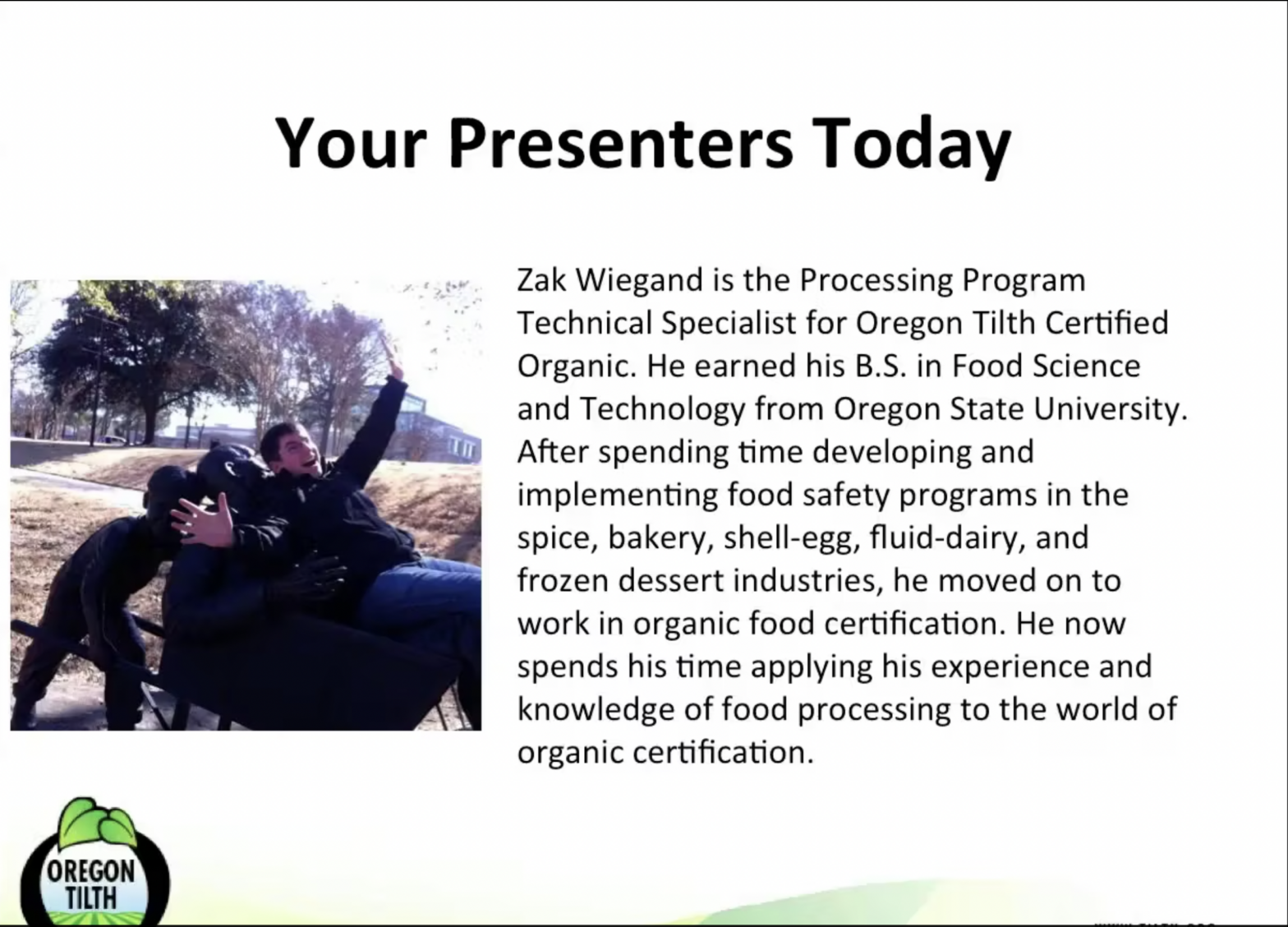
This webinar digs deep into formulations for multi-ingredient processed products under the National Organic Standards. Join us to learn more about the National List and allowed non-organic ingredients, as well as functionality and resources for formulating your product for compliance.
Product Composition and Labeling: 100% Organic and Organic
Watch this webinar to learn about the composition and labeling requirements of the National Organic Program (NOP) for farmers, processors, and handlers. This webinar is the first part of a two-part series. Part one explores the resources necessary for producing and representing products compliant to the 100% Organic and Organic categories of the NOP. These… Continue reading Product Composition and Labeling: 100% Organic and Organic
Product Composition and Labeling: Made with Organic
Watch this webinar to learn about the composition and labeling requirements of the National Organic Program (NOP). This webinar is the second part of a two-part series and will discuss the resources necessary for producing and representing products compliant to the “Made with Organic” category of the NOP. These resources include the NOP standard, NOP… Continue reading Product Composition and Labeling: Made with Organic
Understanding Organic Labeling Requirements and Label Claims
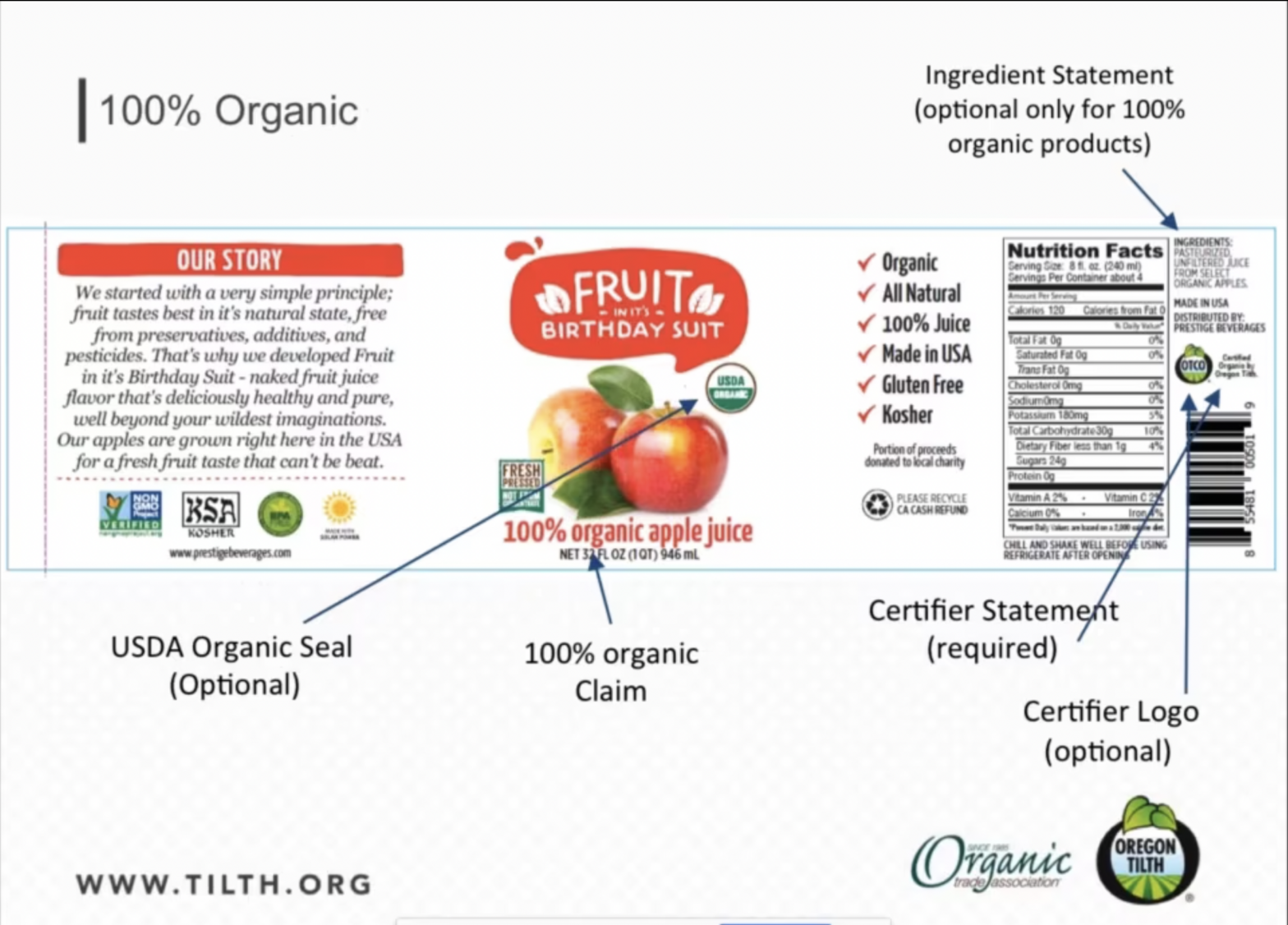
This webinar addresses labeling requirements under the National Organic Program as well as other labeling claims such as non-GMO, natural and more. Join Oregon Tilth Certified Organic (OTCO) staff and other guest speakers to learn about the intricacies of various label claims and how to ensure that your labels are compliant.
Investing in Organic Production: Economics of Transition
Transitioning to organic requires upfront investments in soil building and organic weed management. Organic price premiums may cover some of these initial expenditures, but the returns on these investments are typically delayed until the end of the three-year transition period. This webinar explores the economics of transitioning to organic and report on strategies that are… Continue reading Investing in Organic Production: Economics of Transition